
For residents of Stockton, Newcastle, and the broader Hunter region, the comfort and stability of your dentures are central to your quality of life. Nothing is more frustrating or confidence-shaking than that familiar feeling of your teeth shifting, clicking, or losing suction right when you’re trying to enjoy a meal or socialise with friends.
If you’ve found yourself saying, “Help! My dentures are loose,” you are far from alone. This is arguably the most common issue for all denture wearers, whether you have full or partial appliances.
The good news? It is almost always a manageable problem. Using extra denture glue every morning is not a long-term solution—it’s a temporary Band-Aid. The genuine fix lies in understanding why your dentures are loose and seeking the correct professional treatment.
This comprehensive guide breaks down the primary causes of loose dentures and outlines the effective, permanent solutions available right here in your local area.
Part 1: Why Are My Dentures Suddenly Loose? The Root Causes
A well-fitting denture relies on a perfect, custom-moulded fit against the contours of your gums and jawbone. Over time, that fit changes, leading to the dreaded “slipping.”
1. The Number One Culprit: Bone Resorption (Jawbone Shrinkage)
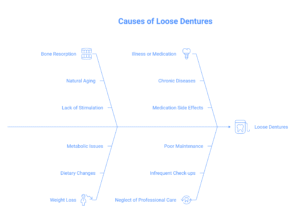
When you lose natural teeth, the jawbone that once supported them no longer receives the necessary stimulation. In response, your body begins to resorb (or break down and reabsorb) the bone tissue—a process called bone resorption.
- The Problem: The underlying bone and gum tissue shrink, but your hard acrylic denture plate remains the same size. This creates a gap between the denture and your gum, which compromises the suction and stability, leading to those embarrassing moments where your dentures slip while talking or eating.
- Timeline: This shrinkage is most rapid in the 6 to 12 months following tooth extractions, which is why immediate dentures always need to be followed by a reline. However, it is an ongoing, gradual process for all denture wearers.
2. The Unique Challenge of the Lower Denture
If you wear a full upper denture, you benefit from a large surface area covering the roof of your mouth, which creates strong natural suction.
The lower full denture has a much smaller, U-shaped base, with the tongue and cheek muscles constantly trying to dislodge it. As the lower jawbone shrinks, stability quickly becomes a major lower full denture problem. This is why the lower arch is notorious for causing the most trouble.
3. Denture Wear and Tear
While acrylic dentures are durable, they are not impervious to damage. Over years of use, the teeth may wear down, which changes your bite alignment. A misaligned bite puts uneven pressure on your gums, which can cause the denture to shift, rub, and feel perpetually loose.
4. Other Contributing Factors:
- Weight Loss: Significant weight loss can change the shape and volume of the soft tissues in your face, leading to a poorer denture fit.
- Illness or Medication: Conditions that cause dry mouth (xerostomia) can drastically reduce the suction of your upper denture, as moisture is essential for a secure fit.
- Neglect of Professional Care: Dentures are not a “set-and-forget” solution. Your gums change, and your appliance requires regular maintenance.
Part 2: The Short-Term Fix vs. The Long-Term Solution
When your dentures are loose, your first instinct is likely to reach for a tube of adhesive.
🚫 The Short-Term Fix: Denture Adhesives
Adhesives (creams, powders, or strips) create a sticky layer that temporarily fills the gap between your denture and your gum.
- Pro: Immediate, temporary stability and helps seal out food particles.
- Con: It is not a fix for a poor fit. If you are using excessive adhesive to keep your dentures in, it’s a warning sign that you are overdue for a professional adjustment. Over-reliance on adhesives can mask underlying problems like irritation or infection.
Local Tip: Always ensure your denture and gums are clean and dry before applying adhesive for the best, safest seal. Never try to use glue to fix a broken denture!
✅ The Long-Term Solution: Professional Relining
A professional denture reline is the most common and effective way to permanently fix loose dentures that are otherwise in good condition.
A reline involves adding new acrylic material to the fitting surface of your existing denture base to perfectly match the current shape of your gums and jawbone. It’s like pouring a fresh, custom lining to restore the original perfect fit.
There are two main types of professional relines:
1. Hard Reline
- What it is: A layer of durable, hard acrylic (the same material as the denture base) is applied. This process is typically done at a dental laboratory and provides the longest-lasting, most stable fit.
- Best For: Dentures that are generally well-fitting but have become loose over time due to gradual bone change.
- Longevity: Hard relines can last 2 to 4 years before the next one is needed.
2. Soft Reline
- What it is: A layer of soft, resilient polymer material is added to the fitting surface.
- Best For: Patients with chronic soreness, tender gums, or sharp, bony ridges that are painful when pressure is applied. The soft material acts as a cushion or shock absorber.
- Longevity: Soft relines need to be replaced more often, typically every 12 to 18 months, as the material can harden and collect bacteria over a longer period.
Considering the Denture Reline Cost in Australia? A reline is significantly more affordable than a full replacement. If you have an immediate denture, a reline is a planned, essential part of the healing process to correct the fit after the initial rapid bone shrinkage. Most clinics in the Stockton/Newcastle area can provide you with an exact quote once your denture has been assessed.
3: The Ultimate Fix – Implant-Supported Dentures
For Stockton residents who are truly fed up with constant movement, slippage, and the daily inconvenience of adhesives, there is a life-changing, permanent solution: Implant-Supported Dentures.
This option directly addresses the two main problems: poor retention and ongoing bone loss.
What are Implant-Supported Dentures?
Instead of resting on the gums, these dentures snap onto a small number of titanium dental implants that have been securely placed into your jawbone.
- The Upper Arch: Although less common due to the good suction in the upper jaw, implants can be used to dramatically reduce the palate coverage of the denture, greatly improving taste and comfort.
- The Lower Arch (The Game-Changer): Two to four implants are placed in the lower jaw, turning a perpetually loose lower denture into an incredibly stable one. The denture “clips” in place, eliminating almost all slippage while talking or eating.
The Benefits:
| Feature | Traditional Dentures | Implant-Supported Dentures |
| Stability & Function | Rests on the gum, prone to movement and clicking. | Anchored securely by implants; minimal to no slippage. |
| Eating Power | Reduced, requires avoiding many hard/sticky foods. | Significantly improved, closer to natural teeth function. |
| Jawbone Health | Continues to shrink over time (bone resorption). | Implants stimulate the bone, helping to preserve jaw structure. |
| Palate Coverage | Full upper denture covers the roof of the mouth (palate). | Upper denture can be dramatically reduced in size or eliminated entirely. |
If you are researching the implant-supported dentures cost Newcastle or looking for dentures vs implants comparison, be sure to speak to a specialist. While the initial investment is higher than traditional dentures, the long-term improvement in comfort, confidence, and oral health often makes it the best value for money over a lifetime.
Part 4: Your Action Plan in Stockton
If your dentures are loose, do not ignore the problem. Loose appliances can cause chronic irritation, leading to painful sores, bacterial buildup, and potential oral infections.
Here is your essential checklist:
- Stop DIY Home Kits: Avoid using over-the-counter DIY reline kits. They are a one-size-fits-all solution that will never match the accuracy of a professional job and can damage the surface of your denture.
- Book a Professional Assessment: Schedule an appointment with your local Dental Prosthetist or Dentist in the Stockton/Newcastle area. They will assess the fit of your denture, check the health of your gum tissue, and check for signs of advanced bone atrophy.
- Discuss Your Options: Based on the examination, you can discuss the best path forward:
- Option 1: Denture Reline (The quickest and most common fix).
- Option 2: New Dentures (If the appliance is more than 5-8 years old or significantly worn).
- Option 3: Implant Stabilization (The gold-standard for a permanent, secure fit).
- Maintain Your Gums: Even with dentures, brush your gums, tongue, and palate daily with a soft toothbrush to remove plaque and stimulate circulation. Remove your dentures every night to give your tissues a rest.
Your dentures should be a source of confidence, not anxiety. Take the simple step today to stop the slipping and restore the comfortable, secure fit you deserve.
Would you like to delve deeper into the types of dental implants used for stabilizing dentures, such as the All-on-4 procedure?